
Last Updated: November 1, 2026
Quick Summary
Hiring a phta certified builder means working with a pool professional who has met a recognized industry standard from the Pool & Hot Tub Alliance. The credential signals verified construction knowledge, but you should still confirm it directly and check accountability, warranty terms and how the builder handles clay soil.
- Certification means the builder has met a standard set by the Pool & Hot Tub Alliance (PHTA).
- Ask for the specific credential name and certificate number, then verify it directly with PHTA.
- Confirm the certification is current, since credentials are maintained through continuing education.
- Ask who handles warranty issues and what the response process looks like.
- Ask how the builder plans for expansive clay soil and intense Texas summer heat.
Table of Contents
- What a PHTA Certified Builder Actually Means
- Benefit 1: Verified Construction Knowledge Behind Every Design
- Benefit 2: Clearer Accountability When Something Goes Wrong
- Benefit 3: Better Handling of Clay Soil and Texas Heat
- How to Verify Pool Builder Certification Before You Hire
- Questions to Ask a Pool Builder and a Realistic Build Timeline
- What to Check in a Pool Builder Contract Before Signing
- Booking Your Free Consultation with Reeder Outdoor Living
- Frequently Asked Questions
What a PHTA Certified Builder Actually Means
If you're weighing pool builders in Amarillo, you'll see the letters "PHTA" on a lot of websites. Reeder Outdoor Living holds the PHTA Certified Pool Builder credential, and we believe a phta certified builder is worth looking for. Here's what that means, in plain terms.
The Pool & Hot Tub Alliance (PHTA) is an industry association that offers professional certifications for pool, spa, and hot tub professionals (Certification).
What the certification doesn't do is guarantee quality on its own. A credential tells you the builder has met a standard. It doesn't tell you how they treat your yard, how they communicate, or whether they show up when a warranty claim comes in. Treat it as a starting point for your research, not the finish line.
Ask any builder you're considering which PHTA credentials they hold, and what those certifications involve.
Benefit 1: Verified Construction Knowledge Behind Every Design
A pretty design on paper means little if the engineering underneath it fails. That's the core value of working with a certified builder.
Certification signals that the builder has been tested on construction fundamentals, not just aesthetics. For a custom inground pool, that includes shell construction, plumbing layout, equipment sizing, and the drainage and grading that protect the structure over time.
A certified builder should be able to explain why a particular shell type, depth, or equipment layout suits your specific yard, rather than offering a one-size catalog option. Ask them to walk you through the reasoning behind their recommendations.
Benefit 2: Clearer Accountability When Something Goes Wrong
The worst pool builder experiences usually come after the final payment. The builder is hard to reach, the warranty claim drags on, or the company simply disappears.
At Reeder Outdoor Living, we run as a family business with direct accountability, and we use no subcontractors managing subcontractors. That structure matters when you're asking a builder to stand behind their work for years.
When you talk to any builder, ask who will handle warranty issues and what their response process looks like. A certification is one piece of evidence. A clear, named line of responsibility is another.
Benefit 3: Better Handling of Clay Soil and Texas Heat
Clay soil and Texas heat are the two conditions that make pool construction in this region harder than it looks on a brochure. Expansive clay moves with moisture, and a poorly prepared site can shift, crack, or leak over time. Intense summer heat adds stress to finishes, equipment, and surfaces.
A builder who understands these conditions plans for them from the beginning. These are construction decisions, not cosmetic ones, and they're worth asking about directly.
If your backyard is smaller or oddly shaped, the same principle applies. Certified builders should be able to adapt a design to your actual lot rather than forcing it into a template.
The article points out that clay soil and Texas heat make pool construction harder in this region, so here is how those conditions shape the work.
| Condition | Why it matters | Builder response |
|---|---|---|
| Expansive clay soil | Moves with moisture, can shift, crack or leak | Site prepared from the beginning |
| Intense summer heat | Adds stress to finishes, equipment and surfaces | Planned for in construction decisions |
| Small or odd-shaped lot | Template designs may not fit | Design adapted to the actual lot |
How to Verify Pool Builder Certification Before You Hire
Verifying a certification is worth doing before you sign anything.
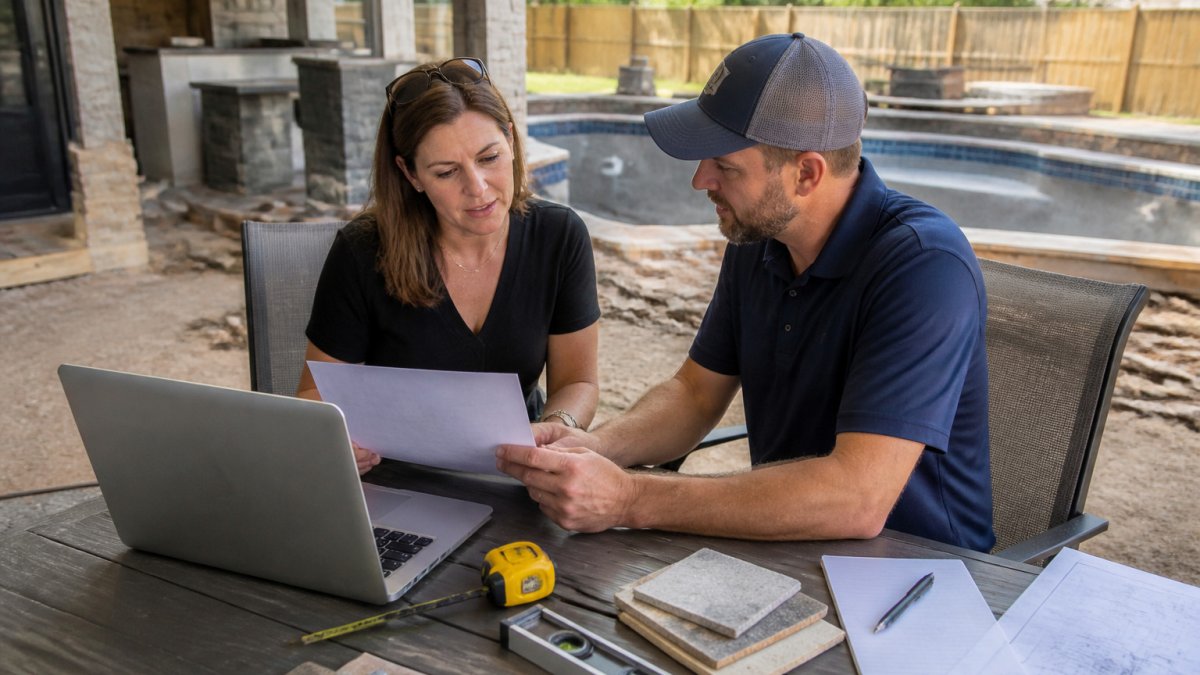
Start by asking the builder for the specific credential name and their certificate number. Then check that information directly with PHTA, rather than relying only on the builder's marketing. Ask whether the certification is current, since credentials are maintained through continuing education.
Confirm the business details too. Check that the company name on the certificate matches the company you'd be contracting with, and ask for proof of licensing and insurance. A certified builder operating under an unlicensed or changed business name is a red flag worth noticing.
Questions to Ask a Pool Builder and a Realistic Build Timeline
Good questions reveal more than a sales pitch does. Ask about their process for handling clay soil, who will be on site day to day, how they handle change orders, and what their warranty covers and for how long.
Timelines vary with the size of the project, the design, permitting, and weather, so ask any builder to explain their typical schedule and what could cause delays. A builder who gives you a single fixed date with no explanation may not be planning realistically.
How Long Does It Take to Build an Inground Pool?
Build time depends on the design, the site conditions, the permitting process, and the weather. Ask your builder for a schedule specific to your project, with milestones you can check against as the work progresses.
What to Check in a Pool Builder Contract Before Signing
Read the contract carefully before you commit. Look for a clear scope of work that lists every component, including excavation, decking, equipment, and finishes.
Confirm the payment schedule and whether it ties payments to completed milestones. Check the warranty terms, including what is covered, for how long, and how claims are submitted. Also look for how change orders are priced and approved.
A pool builder contract checklist should include the builder's license and insurance information, a written timeline, and a clear cancellation clause. If anything in the contract is vague, ask for it in writing before you sign.
Booking Your Free Consultation with Reeder Outdoor Living
If you're planning a custom pool in Amarillo or the Dallas-Fort Worth area, the simplest next step is a conversation. Request a free consultation for your project to talk through your site and your goals.
You can also review our full range of custom pool and outdoor living services to see how we handle design, construction, and renovation. If you want to confirm we serve your area before reaching out, check our service areas, and our frequently asked questions cover common questions about timelines and getting a quote.
Frequently Asked Questions
What is a PHTA certified pool builder?
A PHTA certified pool builder is a professional who holds one or more credentials from the Pool & Hot Tub Alliance, the industry association that certifies pool, spa and hot tub professionals. The credential confirms that a builder has met the organization's requirements, but it does not replace checking references, reviewing completed projects, or confirming current licensing. Ask any builder to name the specific PHTA credential they hold, then verify it directly with PHTA.
How do I verify a pool builder's PHTA certification?
Ask the builder for the exact name of their PHTA credential, then check it through the Pool & Hot Tub Alliance website at phta.org. Confirm the name on the credential matches the company and individual you are hiring, not just a company logo on a website. Also ask for the license number or certificate details, and confirm the builder carries current insurance and holds any required licensing.
What should I ask a pool builder before hiring them in Amarillo?
Ask who will actually supervise your project, whether subcontractors are used and how they are managed, and who you contact if a warranty issue appears after completion. Request a written, itemized estimate and ask how change orders are priced. Ask how the builder handles clay soil and Amarillo's hot, dry summers, and request references from recent projects in the Texas Panhandle. Clear answers to these questions are a good sign of direct accountability.
How long does it take to build an inground pool in Amarillo?
Build time depends on design complexity, site access, soil conditions, permitting, and the weather, so no single timeline fits every yard. Build time varies considerably by design, so ask your builder for a schedule specific to your project. Ask your builder for a written schedule that identifies the main phases and explains what could cause delays. Reeder Outdoor Living can provide a timeline specific to your property during a free consultation.
