
Quick Summary
Choose a pool builder when the pool is the main project, since a pool builder usually answers for the whole pool from design through startup. Choose a general contractor when the pool is one piece of a larger home project, because a GC can manage multiple trades under one contract.
- A pool builder typically manages every phase of the pool build, from excavation to finish work.
- A general contractor often hires pool subcontractors and coordinates them within a broader project.
- Ask each company how much of the excavation, steel, plumbing, and finish work is done in-house.
- Compare quotes only after confirming both include excavation, equipment, decking, fencing, and final inspections.
- Ask who will apply for the permit and who attends the required inspections before signing.
Table of Contents
- Pool Builder vs General Contractor at a Glance
- Who Actually Performs the Pool Construction Work
- Pros and Cons of Hiring a Pool Builder
- Pros and Cons of Hiring a General Contractor
- How Long It Takes to Build an Inground Pool by Project Lead
- Pool Construction Permits in Amarillo, TX and Who Pulls Them
- Booking a Free Consultation to Compare Your Options
- Frequently Asked Questions
Pool Builder vs General Contractor at a Glance
Last Updated: November 2, 2026
Choosing between a pool builder and a general contractor for an inground pool project usually comes down to one question: who will be accountable for the pool itself? A pool builder specializes in swimming pool construction, while a general contractor coordinates construction across many trade types, from framing to electrical to concrete. Both can deliver a pool, but they approach the job differently, and that difference affects scheduling, quality control, and who you call when something goes wrong.
Here's the core difference. A pool builder typically manages every phase of the pool build, from excavation and steel to plumbing, gunite or fiberglass installation, and finish work. A general contractor often hires pool subcontractors and manages them as part of a broader project. Neither model is automatically better, but the structure of the job determines how much control you keep.
The following table summarizes the main differences:
| Factor | Pool Builder | General Contractor |
|---|---|---|
| Core specialty | Swimming pools and related outdoor work | Broad construction across many trades |
| Who performs the work | Usually the builder's own crew plus trusted specialists | Mostly subcontractors coordinated by the GC |
| Accountability | Usually one company answers for the pool | Accountability can be spread across subcontractors |
| Pool-specific know-how | Deep, pool-focused | Varies by subcontractor |
| Best fit | Custom or complex pool projects | Projects that bundle a pool with larger home work |
Pool builders are often a good fit when the pool is the main project. General contractors make more sense when the pool is one piece of a larger renovation, such as an addition, a full kitchen remodel, or a multi-trade backyard overhaul.
Who Actually Performs the Pool Construction Work
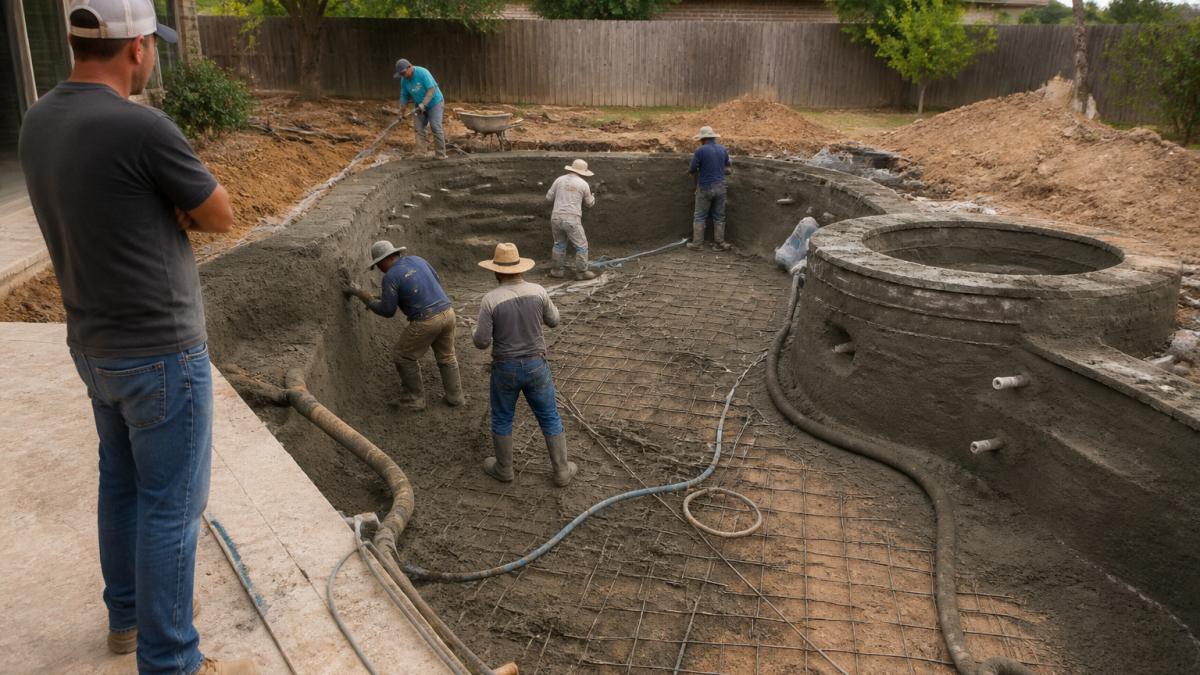
This is where many homeowners get confused. A pool builder often acts as the general contractor for the pool project and subcontracts parts of the labor, which means the labels do not always describe separate delivery models. In practice, the question is less about titles and more about whose crew is on your property and who manages them.
Ask each company directly how much of the excavation, steel, plumbing, and finish work is done by its own employees versus outside subcontractors. Explore Reeder Outdoor Living's custom pools, fiberglass pools, and hardscaping services to see the work a specialist pool builder handles in-house. A general contractor typically relies on a network of specialists, which can work well but puts more coordination responsibility on the project lead.
Pros and Cons of Hiring a Pool Builder
Hiring a pool builder has clear advantages for most custom pool projects.
Pros:
- Single point of accountability. One company is responsible for the pool from design through final startup.
- Pool-specific expertise. Builders focus on gunite, fiberglass, plumbing layouts, equipment sizing, and pool-specific permitting.
- Fewer subcontractor handoffs. With the work concentrated in one team, there are fewer gaps where tasks fall between trades.
- Better fit for custom design. Builders are used to designing around slopes, small lots, and tight access.
Cons:
- Narrower scope. A pool builder may not handle non-pool work like a new roof, interior remodel, or room addition.
- Possible higher quotes. Specialized expertise can cost more than a general bid, so compare scopes carefully.
- Calendar competition. Popular pool builders can have longer lead times during peak season.
A common mistake is comparing a pool builder's quote to a general contractor's quote without checking that the scope matches. Make sure both include excavation, equipment, decking, fencing, and final inspections.
Pros and Cons of Hiring a General Contractor
A general contractor can be a reasonable choice when the pool is part of a larger home project. Because the qualifications of general contractors and pool specialists can differ, you should verify credentials and past pool work rather than assume experience.
Pros:
- One contract for multiple projects. A GC can manage a pool alongside a patio, outdoor kitchen, or addition.
- Flexible scope. General contractors handle many work under one agreement.
- Established relationships. Many GCs have long-standing ties with subcontractors across trades.
Cons:
- Pool expertise varies. The quality of the pool depends heavily on the specific subcontractors chosen.
- More coordination on you. Without a pool specialist managing the job, you may need to watch scheduling and quality more closely.
- Accountability can be diluted. When something fails, it can be harder to tell whether the fault lies with the GC or a subcontractor.
How Long It Takes to Build an Inground Pool by Project Lead
Timelines differ based on design complexity, weather, permitting, and crew availability, so treat any schedule as an estimate until you have a written plan. Pool builders usually control the full sequence, which can make scheduling more predictable. With a general contractor, timing depends on how quickly the GC can line up each subcontractor, so delays in one trade can ripple through the job.
Ask both types of companies for a written schedule with milestones. Pay attention to how they handle weather days and permit delays. A clear plan with realistic dependencies is a better sign than a promised completion date with no detail behind it.
Pool Construction Permits in Amarillo, TX and Who Pulls Them
Permits are one of the most practical differences to clarify before you sign. In many projects, the contractor who pulls the permit is responsible for coordinating inspections, so ask each company who will apply for the permit, which inspections are required, and who attends them. Confirm the requirements with your local permitting authority before construction begins, because local rules can affect setbacks, fencing, electrical work, and drainage.
Your permit questions are also easier to answer when you have the right information. Reeder Outdoor Living's FAQ page covers common questions about construction, pergolas, hardscaping, maintenance, and quoting for Amarillo and Dallas-Fort Worth projects.
Booking a Free Consultation to Compare Your Options
The best way to decide is to compare written proposals side by side. Make sure each one lists the excavation, structural shell, plumbing, equipment, decking, fencing, permits, and warranty terms. Ask who will be on site each day and how changes are handled in writing.
If you want a clearer picture of your options for a custom pool, request a free consultation with Reeder Outdoor Living for your project in Amarillo or Dallas-Fort Worth. Bring your property details, your budget range, and your questions about permits, timing, and design.
Frequently Asked Questions
Do I need a general contractor to build a swimming pool in Amarillo?
Not necessarily. Pool construction is commonly managed by a pool builder who acts as the general contractor for the project and subcontracts specialized trades. The practical question is who holds responsibility for the project, who pulls permits, and who answers for warranty work. Ask any candidate to name the crew that will excavate, shell, plumb and finish the pool, and confirm who you will call if something fails after completion.
What is the difference between a custom pool builder and a general contractor?
A custom pool builder focuses on swimming pools and related features such as decking, equipment, and finishing. A general contractor manages construction across many trades, such as framing, roofing and room additions, and may bring in pool specialists as subcontractors. Neither label guarantees quality on its own. Compare the builder's pool portfolio, the crews it employs directly, and how it handles site-specific issues such as clay soil and engineering letters.
Which professional is more cost-effective for a full backyard transformation?
Cost depends on scope, quantity of features, and delivery schedule, so no single figure applies. A full backyard transformation that combines a pool with patios, outdoor kitchens and landscaping often benefits from one coordinating lead to avoid duplicated markups and scheduling gaps. Request a written, itemized quote from each candidate and compare line items rather than totals. For current pricing on Reeder Outdoor Living projects, contact the team directly for a quote.
How long does it take to build an inground pool?
Timelines vary with design complexity, soil conditions, permitting, and weather, so ask each candidate for a schedule tied to your specific site. Ask how delays are communicated and what the plan is if a phase slips, particularly if you want to use the pool during a set season. Confirm whether the timeline includes permit review and inspections, which often run outside the construction crew's control.
