Last Updated: October 28, 2026
Quick Summary
Pool construction on expansive Texas clay succeeds when the design accounts for soil movement from the start. Get a soil report first, then choose an engineered structure such as a reinforced gunite shell, and plan drainage so water moves away from the pool.
- Soil testing should happen before the layout is committed, since it reveals whether expansive clay is present.
- Gunite shells are sprayed concrete reinforced with steel, tailored to the movement a specific site produces.
- Soil injections and helical piers are two stabilization methods that address clay movement in different ways.
- Clay moves most with seasonal moisture changes, causing cracks and separation at coping or tile lines.
- Grade the lot so surface water and downspouts drain away from the pool before construction begins.
Table of Contents
- Why Expansive Clay Matters for Texas Pools
- Soil Testing for Pool Construction Before You Dig
- Pool Construction on Clay Soil: Structural Options
- How Pool Movement and Expansive Clay Interact
- Planning Pool Drainage Around a New Pool
- Permits, Inspections and Local Rules in Texas
- Your Homeowner Checklist Before Breaking Ground on Your Pool
- Frequently Asked Questions
Why Expansive Clay Matters for Texas Pools
If you're planning a pool in Amarillo or the Dallas-Fort Worth area, the ground under your backyard matters as much as the pool design. Expansive clay soil swells when it gets wet and shrinks when it dries, and that movement can crack a poorly supported pool shell.
Pools can be built successfully on expansive clay, but only when the design accounts for it from the start.
A 1971 University of Texas study of a deep cut in expansive clay documented how these soils behave in the field, and researchers have studied Texas clay problems for decades. The goal is not to avoid clay but to plan around its movement.
Soil Testing for Pool Construction Before You Dig
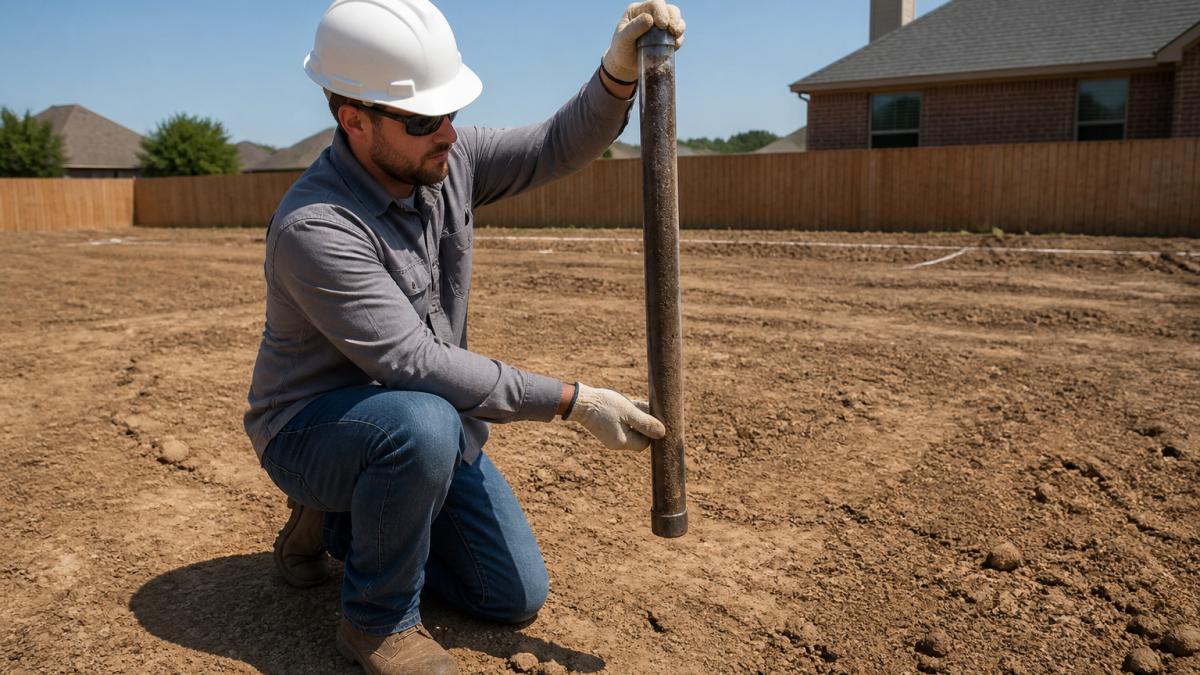
Soil testing is the step most homeowners skip, and it is the one that tells you what your backyard can actually support. Geotechnical information identifies whether expansive conditions are present and, if they are, what mitigation is needed. A Pool Engineering guide on geotechnical information for pool design explains that expansive soil conditions must be identified before the design is finalized.
Ask for the soil report before you commit to a layout. A report that shows expansive clay does not mean the project is off. It means the structural plan needs to reflect what the ground will do.
Pool Construction on Clay Soil: Structural Options
There is no single fix for clay, and the right approach depends on your lot, your soil report and the pool you want. The choice should be made with your builder, not guessed at.
Custom gunite construction is one of the most common choices on clay because it allows engineered structural solutions. Our custom pool design and construction services are built around a site-specific plan rather than a standard template.
Gunite Shells and Engineered Reinforcement
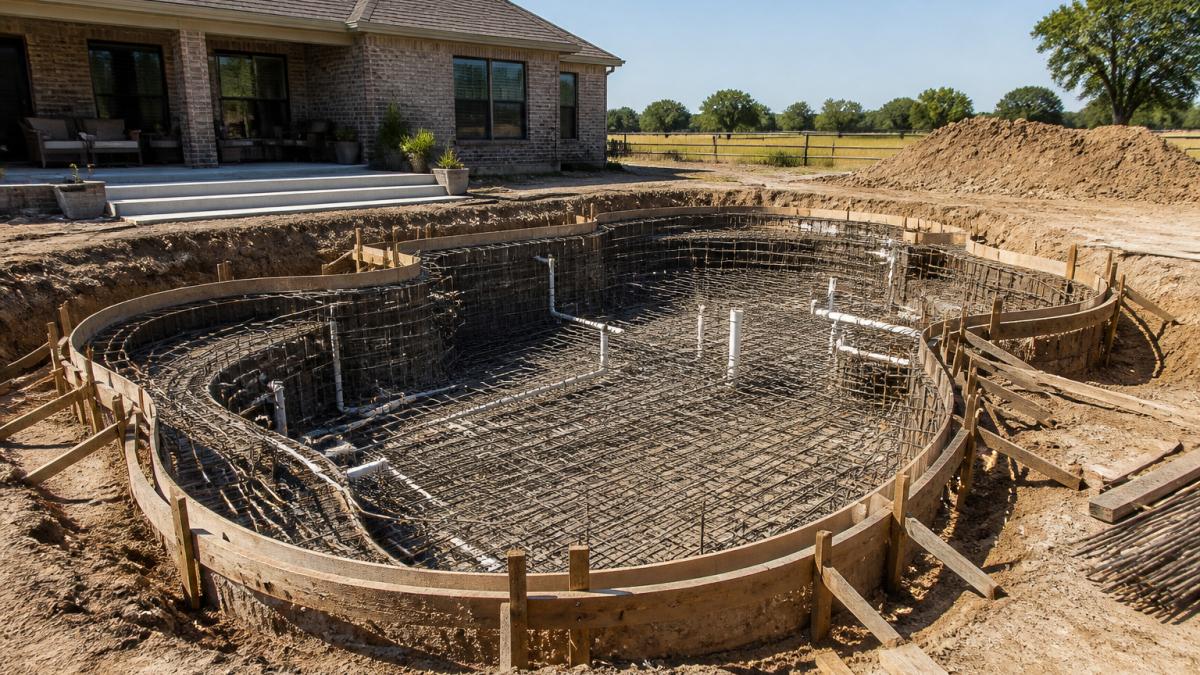
Gunite shells are sprayed concrete reinforced with steel, and they can be tailored to the load and movement a specific site produces. On clay, the reinforcement plan and the shell thickness are set after the soil is understood, not before.
Reinforcement is only part of the picture. The design also needs to account for how the walls and floor will move, and that is where an experienced builder earns their keep.
Soil Injections and Helical Piers
Two stabilization methods come up often in North Texas. Soil injections place chemical solutions into the ground to reduce movement, and helical piers transfer the load to more stable material below the clay. Neither is an automatic requirement, and each has trade-offs in cost and effectiveness that depend on the site.
If your builder recommends piers, ask why. A good answer ties the recommendation to your soil data and your pool design.
The main structural approaches on clay each address movement in a different way, as summarised below.
| Option | Best for | Key difference |
|---|---|---|
| Gunite shell with engineered reinforcement | Sites where shell thickness and steel are tailored to movement | Reinforcement and thickness set after soil is understood |
| Soil injections | Reducing ground movement around the shell | Chemical solutions placed into the ground |
| Helical piers | Transferring load to more stable material below clay | Load moved below the clay layer |
How Pool Movement and Expansive Clay Interact
Clay moves most with seasonal changes in moisture. A dry summer followed by a heavy rain can shift the ground enough to stress a pool shell that was not designed for it. Movement is gradual, but cumulative, and it shows up as cracks, separation at the coping or tile lines, and changes in how the pool sits.
Water balance around the pool matters too. Keeping the soil moisture around the shell as consistent as possible reduces the swings that drive movement. This is why drainage planning belongs in the design phase, not as an afterthought.
Planning Pool Drainage Around a New Pool
Drainage is where many clay-soil problems start. Surface water that pools against the shell, or downspouts that dump next to the pool, add moisture unevenly and speed up movement. Plan grading so water moves away from the pool and the house before construction begins.
For commercial or multi-unit properties, ongoing inspection matters as much as the initial plan. Our commercial pool services across Dallas-Fort Worth include leak detection and equipment repair once a pool is in service. Early detection of a leak is far cheaper than a structural repair later.
Permits, Inspections and Local Rules in Texas
Permits and inspection requirements vary by city and county, so confirm the rules for your address before you build. Some cities require construction fencing around the site from the time excavation begins. For example, Southlake's 2026 pool guidelines set that requirement for in-ground pool and spa sites in that city. Your own city may differ, so check with your local building department.
Ask for a written list of which inspections will happen and when, so there are no surprises mid-project.
Your Homeowner Checklist Before Breaking Ground on Your Pool
Use this checklist before you sign a contract:
-
Get a soil report or geotechnical assessment for your lot
-
Ask how the design accounts for expansive clay movement
-
Review the grading and drainage plan around the pool and house
Ready to start? Request a free consultation.
Frequently Asked Questions
Can you build a swimming pool on expansive clay soil in Texas?
Yes. Pools can be built on expansive clay, but the design needs to account for the site's conditions.
How does expansive soil affect an inground pool?
Expansive clay swells when wet and shrinks when dry. Those cycles can affect structures. Consult a qualified professional about site-specific conditions.
What soil tests should be done before building a pool in Amarillo?
Soil conditions can vary across a neighborhood. Consult a qualified professional about evaluating your lot and the implications for a pool project.
How should backyard drainage be planned around a new pool?
Drainage planning is a consideration for a pool project on expansive soil. Consult a qualified professional about site-specific drainage.
Can poor drainage cause a pool to shift or crack?
Drainage is a consideration for pool projects on expansive soil. Consult a qualified professional about site-specific conditions.
What pool construction methods help manage expansive soil?
Construction approaches depend on site-specific conditions. Consult a qualified professional about options for your lot.
What does a Texas homeowner need to know about permits for a pool on clay?
Check with your local building department about requirements for your property.
